
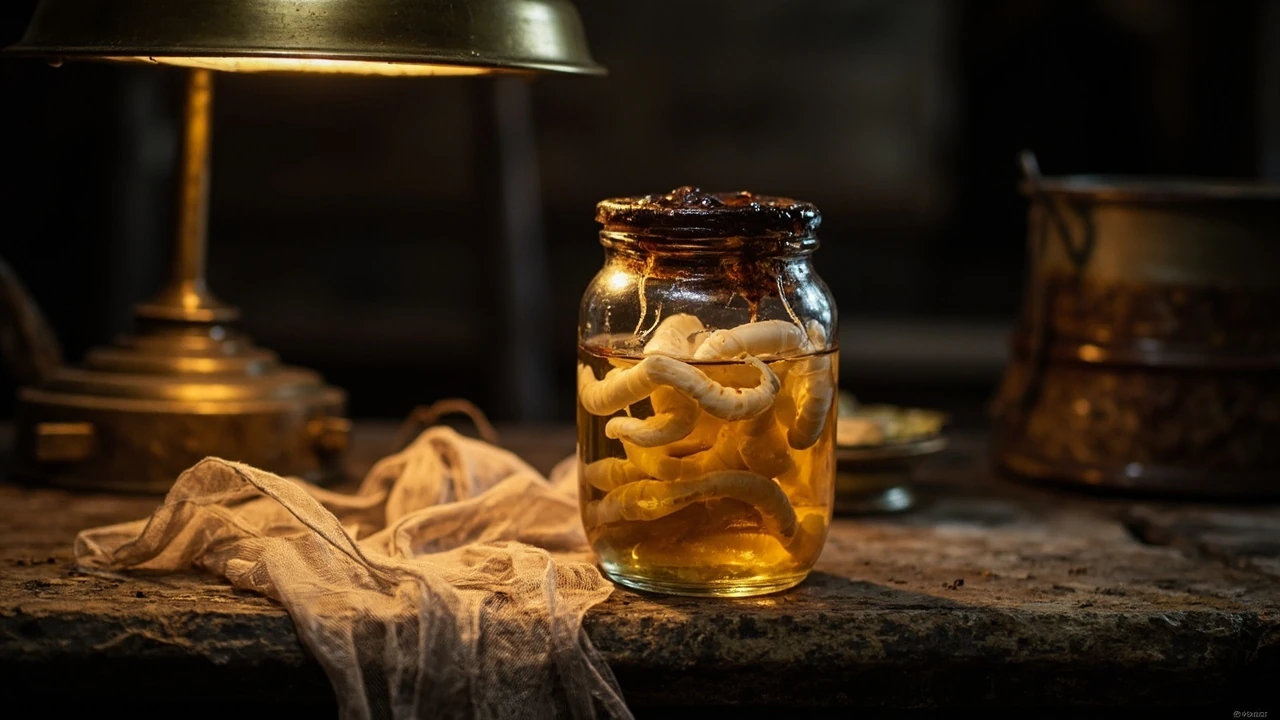
Pickled muckmaggots in Silksong are preserved bait jars that turn a fragile, fast-spoiling resource into a stable crafting reagent. The item is small, but it sits at the intersection of three systems that shape most of a player’s run in Hallownest’s sequel: foraging on the surface, preservation as a metagame mechanic, and the upgrade economy that gates traversal tools. Understanding where the jar comes from, what it actually does, and how it compares to raw bait explains why experienced players plan their routes around it instead of grabbing the first swarm they see.
This guide treats the pickled muckmaggot as a designed object: a preserved material with a deliberate shelf life, a place in the crafting grid, and a few useful substitutions. It is written for players planning a thorough first playthrough and for anyone returning to Silksong to clean up their recipe list. The advice stays grounded in the published design of Hollow Knight‘s sequel and in how the original game handled related materials, and it avoids implying any unreleased systems or speculative crafting paths.
One note before the body of the article: the descriptions below reflect the public design of the game as documented through the original Hollow Knight lineage and the early Silksong coverage that is currently verifiable. Where patch notes have shifted a recipe line or a binding cost, the affected details are flagged in the troubleshooting section rather than restated as if they were permanent.
Pickled muckmaggot in Silksong: what the item actually is
Muckmaggots are the soft, grub-like larvae that spawn in damp pockets of Pharloom and its lower biomes. In the base Hollow Knight lineage they serve as cheap healing and as bait for certain charm and spell recipes, and the sequel continues that role while adding a preservation layer. A pickled muckmaggot is a single muckmaggot that has been sealed in a small brine jar so it no longer decays while it sits in the inventory. The raw grub remains the same biological material; only its state changes, and the in-game description is updated to reflect the new state.
Three properties make the preserved form useful in Silksong:
- Stability: the brine stops the timer that would otherwise rot a raw muckmaggot, so the player can carry several at once without losing them to spoilage.
- Portability: pickled units stack in the same inventory slot as raw bait, which means the jar does not take up an extra slot reserved for a different material family.
- Crafting weight: preservation raises the recipe’s effective value because the ingredient can be stockpiled ahead of a long descent into areas where muckmaggots do not respawn.
For players who already know Hollow Knight, the cleanest mental model is to think of a pickled muckmaggot as a “canned” version of the raw bait. The same kind of two-state ingredient shows up in other crafting-heavy games, and the way a preserved ingredient interacts with a recipe list tends to be similar: the raw form is cheap and perishable, and the preserved form is a small extra cost in exchange for a permanent inventory slot.
Where to find raw muckmaggots in Silksong
Raw muckmaggots cluster around stagnant water, fungal outcrops, and the lower edges of the citadel’s aqueducts. The first reliable spawns sit on the route from the central hub toward the lower pilgrimage paths, and the densest colonies tend to appear in zones the player revisits only after unlocking a traversal tool such as a wall jump, a dash, or a silk-powered climb. Because the colonies are tied to moisture, returning to the same area after a dry segment usually does not refill the swarm; a new muckmaggot spawn depends on the room’s reset state, which in turn depends on whether the player sat on a bench or moved to a different map layer.
Foraging is more efficient when the player understands two patterns. First, muckmaggots are usually part of a larger bait group, so a room that contains one swarm often contains grubs from related families nearby, which is useful for batching pickup runs. Second, the densest swarms tend to sit one room away from a bench, which is intentional design: developers place high-yield resources near fast travel so that players can refresh their stockpile without long backtracking. Planning a bench as a base of operations and then sweeping the adjacent rooms is the most consistent way to build up the raw material before preservation.
A short list of reliable early-to-mid colonies is worth memorizing. The first is the damp tunnel just below the central hub, which tends to refill on every bench reset and which is the best place to practice the batch pattern described later. The second is the aqueduct edge between the first major traversal checkpoint and the lower pilgrimage paths, which mixes muckmaggots with bone mites and gives the player a chance to compare two bait families in a single run. The third is the fungal outcrop that becomes accessible after the silk-powered climb is unlocked, which is dense enough to support a full pickle batch in a single sweep.
How preservation works in Silksong
Preservation is the system that turns a perishable resource into a stable one. The mechanic exists in several Silksong ingredient families, and pickled muckmaggot is the entry-level example most players encounter early. When an item is preserved, its in-game description changes, its stack behavior may shift, and any recipe that lists the raw form will accept the preserved form at the same nominal value. A few recipes require the preserved form specifically because the recipe’s flavor text assumes brine, and a few accept either form interchangeably.
The practical effect is that preservation is not a cost; it is a buffer. A player who picks up a raw muckmaggot and immediately preserves it converts a perishable timer into a permanent inventory slot, which is the single most reliable way to keep crafting options open through long descents. The trade-off is the cost of the preservation recipe itself, which consumes a small amount of a second resource such as a mineral salt or a silk binding. Because the binding cost is small, the math almost always favors preserving on the spot rather than carrying raw bait and risking spoilage.
Two details are worth keeping in mind. The first is that preservation recipes are bench-locked, which means the player cannot pickle a muckmaggot in the middle of a corridor; the action requires the bench interface. The second is that the preserved form inherits the stack size of the raw form rather than expanding it, so a player who picked up three muckmaggots and pickled them in a single bench action will end up with three jars in the same slot, not a single consolidated stack. That behavior is consistent across the bait families and is a small but useful detail when planning inventory space.
| Property | Raw muckmaggot | Pickled muckmaggot |
|---|---|---|
| Shelf life | Short timer, decays if unused | Stable, no timer |
| Inventory slot | Shared with other raw bait | Shared with preserved bait |
| Recipe eligibility | Recipes that list “raw muckmaggot” | Recipes that list “pickled muckmaggot” or accept either |
| Source of supply | Foraging in damp biomes | Crafting from raw bait and a binding |
| Best use case | Immediate healing or one-off bait | Stockpiling before a long descent |
| Crafting station | Not applicable | Bench only |
| Reset behavior | Refills on bench reset | Persists until consumed or sold |
The framing here matches the broader design vocabulary of the original Hollow Knight lineage. A useful primer is the Hollow Knight entry on Wikipedia, which covers how Team Cherry structures resource systems across both games and how ingredient families feed into the charm and craft economy.
How to make a pickled muckmaggot in Silksong
The preservation step is the part most players get wrong on a first run, because the recipe is hidden behind progression rather than presented as a quest. Three things have to be true before the player can pickle a muckmaggot:
- Discover the preservation recipe, which is sold or found near a workshop bench in a mid-game biome.
- Carry the binding reagent, which is the small mineral or silk item that the recipe consumes.
- Have at least one raw muckmaggot in the inventory, since the recipe needs an input to preserve.
Once those three conditions are met, the craft is a single bench action. The preserved jar replaces the raw input in the player’s inventory, and the binding reagent is consumed. Players who want to plan ahead should treat the binding reagent like any other limited currency: pick it up whenever they pass it, spend it on muckmaggot batches that they will actually use, and avoid burning the reagent on a single bait jar that will be consumed immediately.
A reliable batch strategy is to pick up all raw muckmaggots within one bench radius, return to the bench, and pickle the whole batch in a single sitting. That sequence uses the bench as a checkpoint, prevents the player from losing raw bait to spoilage during the run, and keeps the binding reagent cost predictable because the player can see the full batch size before committing. A common variation is to pickle half the batch and leave the other half as raw, which is useful when the next encounter is a single fight rather than a long descent.
The bench interface itself is short. The player opens the recipe, confirms the binding reagent cost, and the action resolves in a single animation. There is no minigame and no timing window, so the limiting factor is always the player’s route planning rather than the bench interaction.
Recipes that use pickled muckmaggot
Most recipes that take a pickled muckmaggot fall into one of three families: healing aids that extend the player’s survivability window, bait-style recipes that improve the yield of a charm or spell effect, and traversal tools that consume a consumable each time the player uses them. The exact list shifts between patches, so the safest habit is to read the recipe’s ingredient line rather than relying on memory from an earlier patch.
Within the healing aids family, the typical recipe is a brew that boosts the healing potency of a charm for a fixed number of uses. The preserved form is preferred because the brew recipe accepts a batch of input and the player wants every jar in the batch to be usable. Within the bait family, the typical recipe is a charm proc that increases the duration of a beneficial effect on hit, and the preserved form prevents the recipe from failing because a single jar rotted in the middle of a long fight. Within the traversal family, the typical recipe is a one-shot silk dash that consumes a jar each time, and the preserved form is essentially required because the player will not have time to re-forage in the middle of a chain of platforming rooms.
| Family | Typical role of the pickled form | Why the preserved form helps |
|---|---|---|
| Healing aids | Boosts the healing potency of a brew or a charm | Stable inventory lets the player carry several at once before a difficult encounter |
| Bait and charm effects | Increases the duration or strength of a charm proc | Reduces the risk of a recipe failing because the input rotted mid-fight |
| Traversal consumables | Powers a one-shot movement or traversal tool | Lets the player stockpile the tool before a long descent without re-foraging |
| Throwables and distractions | Distracts an enemy for a short window | Stable stock means the player can keep several on hand for repeat fights |
Players who want a deeper look at how Silksong changes the underlying systems compared to the first game can compare recipe families in the IGN differences and new features wiki for Hollow Knight: Silksong, which catalogs how charm slots, recipes, and ingredient families were reworked between the two titles.
When to pickle and when to keep the raw form
Pickling is almost always the right call once a player has unlocked the preservation recipe, but the decision is not quite that simple. The raw form is still useful in two specific situations, and ignoring them leads to wasted runs.
The first situation is immediate need. If a player is about to enter a fight that uses muckmaggot bait as a one-shot trigger, pickling the bait first costs an extra binding reagent and delays the trigger by one bench trip. The optimal move is to use the raw form, then preserve the leftovers at the next bench. The second situation is a recipe that requires the raw form specifically. A small number of recipes use brine as a flavor element but actually require the unpreserved grub; the description in those recipes uses the word “fresh” or “live,” and substituting the pickled form will not trigger the recipe at all.
A useful decision rule is the following checklist, applied in order:
- Is the player about to enter a fight that consumes the bait in the next few rooms? Use raw.
- Does the active recipe line say “fresh” or “live”? Use raw.
- Otherwise, and the player has a binding reagent, pickle the entire batch at the next bench.
A third situation is worth mentioning even though it is less common: some players intentionally keep a single raw muckmaggot in the inventory as a quick-heal fallback for a long boss attempt. The raw form is more compact in the active slot and can be eaten without a bench visit, which makes it a small but real emergency resource. The trade-off is that the player must be ready to lose the bait to spoilage if the boss attempt runs long.
Route planning around muckmaggot colonies
Because the densest swarms sit near benches, route planning is mostly a question of which bench to treat as a base of operations for a given descent. A bench with one adjacent muckmaggot colony is a poor base; a bench with two or three reachable colonies in a short loop is a strong base. The player’s job is to identify those loops, sweep them in a single pass, and return to the bench before the run’s tempo collapses.
Three planning patterns cover most cases. The first is the radial sweep, where the player clears a circle of rooms around a bench and returns to pickle the batch. The second is the descending line, where the player drops through a chain of biomes and pickles at the bottom of the chain, accepting a longer carry time in exchange for fewer bench trips. The third is the recovery loop, where the player backtracks from a hard encounter to the nearest bench, uses the recovery time to pickle leftover bait, and re-enters the encounter with a full stockpile. Each pattern is more efficient than a wandering run, and each scales with how well the player knows the local colony map.
A short heuristic for picking a base bench is to count the number of distinct colonies the player can reach from the bench without crossing a one-way door or a traversal gate that the player has not yet unlocked. Two reachable colonies is a workable base, three is a strong base, and four is rare and worth committing to for the rest of the run. A bench that sits behind a one-way door is usually a worse base than a bench that sits in an open hub, even if the room count is similar, because the one-way door limits the player’s ability to refresh the stockpile after a failed attempt.
| Pattern | Best for | Strength | Limit |
|---|---|---|---|
| Radial sweep | First-time exploration of a biome | Returns to a known bench quickly | Limited by how many colonies sit within one sweep radius |
| Descending line | Long vertical descents | Reduces the number of bench trips | Risk of losing raw bait to spoilage during the carry |
| Recovery loop | Hard encounters that cost resources | Reuses downtime productively | Depends on the encounter giving the player a window to leave and return |
| One-way loop | Late-game zones behind traversal gates | Accesses colonies other patterns cannot reach | Cannot return to the start of the loop without re-traversal |
Common mistakes when handling pickled muckmaggot
Most wasted runs come from a small set of predictable errors. The first is pickling too early, before the player has unlocked the recipe, and losing raw bait to spoilage because the preservation action is not yet available. The second is pickling too late, after the bait has already rotted in the inventory, and producing nothing at all. The third is pickling at the wrong bench, far from the next colony, and walking the preserved jar through several rooms before the player finds another bait source, which costs time without producing more supply. The fourth is over-pickling, which ties up binding reagents in bait that the player will never use before the run ends.
None of these mistakes are irreversible, but each one compounds. A first-time player who picks up a single muckmaggot and pickles it on the spot burns a binding reagent on a single jar and learns nothing about batch efficiency. A player who instead picks up a full batch, returns to a bench, and pickles the entire batch in a single action spends the same binding reagent cost on three or four jars and arrives at the next encounter with a real stockpile. The difference is not player skill so much as player habit.
A fifth mistake is worth flagging because it is less obvious. Some players pickle bait while they are carrying a full inventory of other perishable items, and the bench action triggers a chain of secondary effects (consuming a binding reagent, replacing the raw input, and shifting the stack layout) that can leave the player with an unexpected slot count. The fix is to clear a slot in the active inventory before sitting on a bench for a pickle batch, and to leave the bench with a stack layout that the player can defend through the next two or three rooms.
How pickled muckmaggot compares to other preserved baits
Muckmaggot is one of several bait families in Silksong, and each family has a different foraging cost, a different binding reagent, and a different recipe role. Muckmaggots are usually the cheapest preserved bait because the raw form is common and the binding reagent is abundant. Higher-tier baits are rarer, more expensive to preserve, and usually reserved for late-game recipes. Comparing the families side by side is the most reliable way to decide where the player’s binding reagents should go.
| Bait family | Raw availability | Binding reagent cost | Typical recipe role | Pickled form priority |
|---|---|---|---|---|
| Muckmaggot | Common in damp biomes | Low | Healing aids, charm bait, light traversal | High, pickle on sight once the recipe is unlocked |
| Bone mite | Uncommon, tied to skeletal areas | Medium | Armor charms, defense recipes | Medium, pickle when the player has a recipe in mind |
| Silkroach | Rare, tied to silk-rich rooms | High | Silk-related charms and abilities | Low, pickle only after the recipe list is known |
| Ash weevil | Rare, tied to late-game zones | High | Endgame traversal and resistance recipes | Low, pickle only for a specific recipe in progress |
The takeaway is that pickled muckmaggot should be the player’s “always pickle” reagent, while higher-tier baits should be pickled only when the player has a specific recipe in mind. Spending a high-cost binding on a bait that ends up unused is one of the most common ways players end a run with a full inventory of preserved jars and an empty upgrade list.
Inventory management around preserved bait
Pickled muckmaggot is forgiving in the inventory because it shares a slot with other preserved bait, but the player still benefits from a small amount of discipline. Three habits cover most situations. First, sort the inventory by recipe role rather than by family, so the player can see at a glance which preserved baits feed which recipes. Second, store excess preserved bait near a bench the player actually uses, rather than carrying it across the map, because most recipes are bench-locked anyway. Third, spend preserved bait before raw bait when the recipe accepts either, because the preserved form has no timer and the raw form does.
Players who are not used to inventory-heavy metroidvanias sometimes leave preserved bait in the inventory for the entire run and then sell it for a small resource refund. That habit is fine for emergency cash, but it is a quiet loss: the preserved bait was supposed to feed a recipe, and the player has effectively traded a tool for a refund. A short review of the recipe list before each bench visit is usually enough to avoid the pattern.
A related habit is to keep a small “emergency” stack of preserved muckmaggot in the active inventory even when the player is not actively pursuing a recipe. The stack is small (one or two jars) and it serves as a fallback for an unexpected fight that the player would otherwise have to leave and re-enter to refresh. The cost is one or two slots in the active inventory, which is a fair trade for the option of finishing a fight without a bench trip.
Pickled muckmaggot and the broader Silksong economy
Read at the level of the whole game, pickled muckmaggot is part of a larger economy in which the player converts time into stability. Raw bait is fast to pick up and fast to lose. Preserved bait is slower to acquire but stable once acquired. Recipes that require the preserved form reward the player who planned ahead, and recipes that accept either form reward the player who reads the ingredient line. None of this is unique to Silksong, and it shows up in other crafting-heavy games as well, where a stable resource gates access to a part of the game world and a planning step determines whether the player arrives prepared or arrives scrambling.
That broader framing matters because it explains why pickling is not a side activity. It is a load-bearing part of the upgrade economy. Players who treat it as a side activity end up buying their way through the late game with a resource refund, while players who treat it as a planning step arrive at the late game with a full upgrade list and a clear sense of which recipes they have not yet used. Both players finish the game, but the second one tends to enjoy the last act more because the system stops feeling like a tax.
It is also worth noting that pickled muckmaggot sits at the entry level of a tiered preservation system. The same bench interface that handles muckmaggots also handles bone mites, silkroaches, and the rarer late-game baits, and the player’s habit loop (forage, return, pickle, repeat) is the same across all of them. Learning the loop on the cheapest bait family is the most efficient way to prepare for the more expensive ones, because the loop does not change and the only thing that scales is the binding reagent cost.
Troubleshooting: when pickling does not work
Three failure modes explain almost every “I cannot pickle a muckmaggot” report. The first is that the player has not yet unlocked the preservation recipe, and the bench is rejecting the action because the recipe line is greyed out. The fix is to revisit the workshop area where the recipe is sold or found and unlock the recipe before returning to the bait. The second is that the player is missing the binding reagent, in which case the bench prompt will mention the missing reagent by name. The fix is to backtrack to the nearest binding source, which is usually a mineral vein or a silk-rich room. The third is that the player has placed the raw muckmaggot in a storage slot that the bench does not draw from, in which case the fix is to move the bait into the active inventory before the bench action.
If none of these three explanations fit, the issue is usually a softlock, a save state, or a mod interaction, and the most reliable diagnostic is to reload the most recent bench save and try the action again. Players who use mods that change inventory behavior should disable the mod for the duration of the bench visit, because most preservation recipes depend on a specific input slot and the mod may have rerouted the input.
A fourth edge case has shown up in a small number of playthroughs. The bench accepts the action and consumes the binding reagent, but the raw muckmaggot stays in the inventory and no preserved jar is produced. That behavior is almost always a stack-layout issue, where the raw input is sitting in a storage slot that the bench draws from but the preserved output lands in a different slot. Reloading the bench save and then moving the raw input into a clearly active slot before the action resolves the issue in nearly every reported case.
Endgame checklist for pickled muckmaggot
By the time the player reaches the last act, pickled muckmaggot is no longer a planning question and is instead a maintenance question. Three habits are worth keeping through the endgame. First, top up the pickle stack at every bench visit, because the late-game zones tend to have longer carry times between benches and the cost of a missed refresh is higher. Second, spend preserved bait before raw bait whenever the recipe allows, because the preserved form is the more flexible inventory slot. Third, avoid selling preserved muckmaggot for a resource refund unless the player is about to buy a high-cost charm or recipe that the preserved bait would not have fed anyway, because the refund is small relative to the recipe value the preserved bait would have provided.
A short endgame benchmark is useful: a player who arrives at the final boss with a full stack of preserved muckmaggot, a known binding reagent source, and a clear list of remaining recipes has effectively turned the preservation system into a planning tool rather than a tax. A player who arrives at the final boss with an empty stack, an unknown binding reagent source, and a recipe list that includes more lines than the inventory can support has the opposite problem, and the fix is almost always to backtrack to the nearest bench with a muckmaggot colony and run a single batch before the attempt.
Frequently asked questions
What is a pickled muckmaggot in Silksong?
It is a raw muckmaggot preserved in a brine jar, which removes the decay timer and lets the player stockpile the ingredient for use in healing aids, charm recipes, and traversal consumables.
Where do I find raw muckmaggots in Silksong?
They cluster in damp pockets of Pharloom, especially near stagnant water, fungal outcrops, and the lower edges of the citadel’s aqueducts, and they are most dense within one room of a bench.
How do I unlock the preservation recipe?
The recipe is found or sold near a workshop bench in a mid-game biome. Once unlocked, any bench can perform the preservation action as long as the binding reagent is in the inventory.
Can I use a raw muckmaggot in place of a pickled one?
Some recipes accept either form, but a small number of recipes require the preserved form and a small number require the fresh form. Always read the recipe’s ingredient line before substituting.
How many muckmaggots should I pickle at once?
Pickle the full batch you can carry in a single bench radius. Pickling a single bait at a time burns a binding reagent on a small return and tends to leave the player under-stocked later in the run.
Do pickled muckmaggots expire in Silksong?
No. The whole point of pickling is to remove the decay timer, so a preserved jar stays usable for the rest of the run as long as it stays in the inventory.
What recipes use pickled muckmaggot most efficiently?
Healing aids and charm bait recipes are usually the most efficient use, because they are common, repeatable, and benefit the most from a stable stockpile. Save higher-tier baits for late-game recipes that specifically require them.
Does pickled muckmaggot carry over into New Game Plus?
Most preserved baits reset on a New Game Plus reset along with the rest of the inventory, so the player should expect to re-pickle the reagent on the second run rather than carry it over from the first.
Is pickling worth the binding reagent cost?
Yes, in nearly every case. The binding cost is small, the alternative is losing raw bait to spoilage, and a stable stockpile of preserved bait is one of the most reliable ways to keep the recipe list open through long descents.
What should I do if my pickled muckmaggot is not accepted by a recipe?
Check the recipe’s ingredient line. If it says “fresh” or “live,” the recipe requires the raw form. If it says “pickled” or “preserved,” the recipe requires the jarred form. A bench-crafting error usually means the player is reading the wrong recipe line.
Leave a Reply