
RE9 files explained: what every Resident Evil Requiem document is and why collectors track them
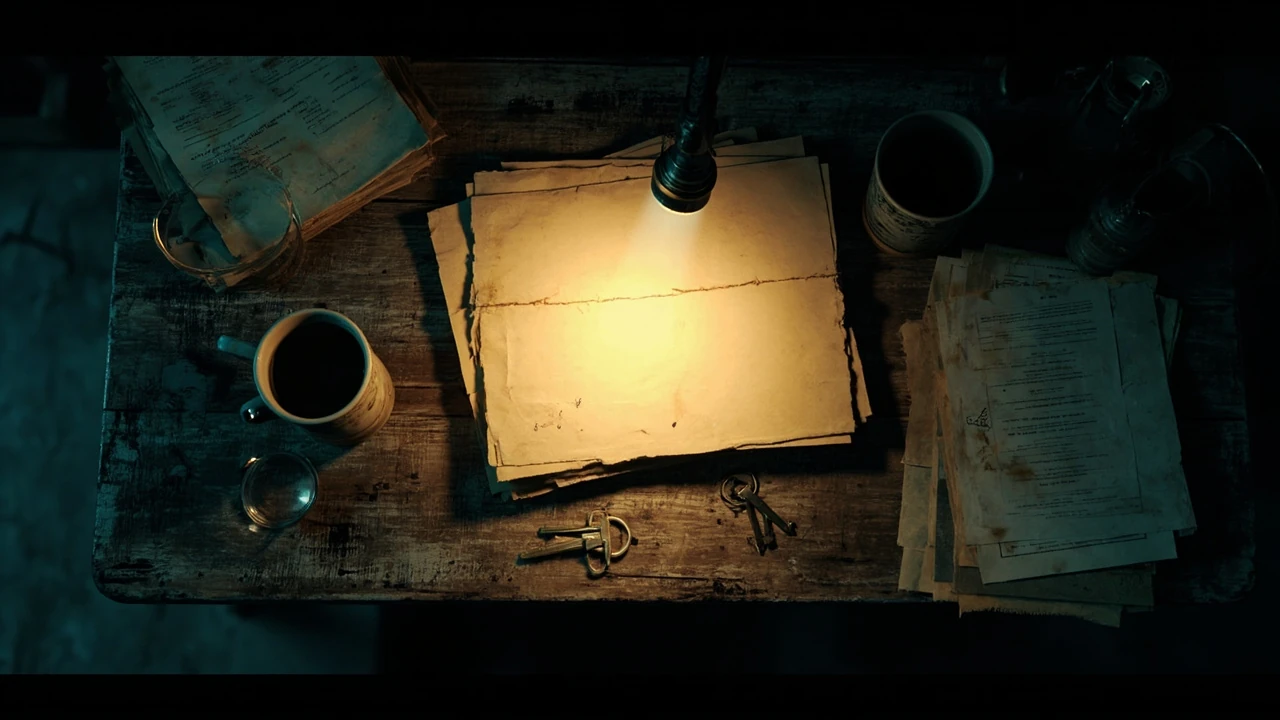
RE9 files are the collectible documents, case notes, audio logs, and personal records that players recover while progressing through Resident Evil Requiem. They form the investigative layer of the campaign: the scattered paperwork that explains what happened at a research site, who the missing people were, and how the outbreak connects to earlier events in the series. For completionists, RE9 files are also a long-term goal, because the game ties several endings, weapon upgrades, and lore entries to a high document completion rate rather than to a single late-game fetch quest.
Unlike a pure cosmetic collectible, each file is written as if it were a real artifact from the world. Autopsy summaries read like a coroner’s intake form, internal memos read like corporate email, and lab reports use the clinical language a containment team would use under deadline pressure. That design choice matters because the file system is the only place where the connective tissue between locations, characters, and bioweapon research is fully explained. Cutscenes assume the documents have been read, and side conversations in safe rooms reference findings the player may have already picked up.
This guide walks through how the RE9 files system is organized, where the trickiest documents tend to hide, how completion rates are calculated, and which decisions depend on having collected a critical mass of files. It is written for players who want to plan a thorough first run and for returning players who want to finish an incomplete save without replaying the entire campaign.
How the RE9 files system is organized
RE9 files are not a single undifferentiated pile of pickups. They are divided into categories that mirror the in-game investigation workflow, and the categories affect both the menu layout and the way completion percentages are reported. Understanding the structure is the first step toward planning a clean run, because some categories are tied to a single chapter while others span the entire game.
The collection is split across the following primary categories:
- Case files: the main investigative documents. These include incident reports, witness statements, internal emails, and chain-of-custody forms that explain the central outbreak timeline.
- Research logs: laboratory and field-research notes written by scientists, medics, and quarantine officers. They often contain the technical detail behind bioweapon behavior, containment failure, and experimental treatments.
- Personal records: letters, diary pages, voicemails, and photographs from named characters. These rarely advance the main plot directly, but they fill in motivation, family ties, and personal stakes.
- Audio logs: short recorded transmissions, interviews, and dictation entries. Some are unlocked automatically through story progression; others are optional pickups found in side rooms.
- Key documents: files that act as quest items, such as door codes, safe combinations, and authorization letters. They are tracked in the same menu but flagged with a distinct icon.
- Hidden dossiers: rare files that are not referenced in the in-game hint system. They are usually found off the critical path and often require specific tools, conditions, or backtracking to obtain.
Each category has its own completion counter that ranges from zero to the total for that chapter or zone. When the player opens the in-game archive, the totals reflect what is currently available in that save, not the theoretical maximum across all difficulty modes. That distinction matters: a file that is only available on a higher difficulty, in a New Game Plus run, or after a specific ending will show as locked rather than missing, which prevents players from wasting time hunting for something that is not yet unlockable.
The archive also distinguishes between recoverable and permanently missed files. Recoverable files are those that the player can still obtain through chapter select, backtracking, or a future playthrough. Permanently missed files are flagged in a separate column and usually correspond to a story-state condition that no longer applies. That second flag is the one most players miss on a first read-through, and it is the reason a casual completion rate can plateau at 92 or 93 percent even after revisiting every chapter.
Files are also tagged with the chapter in which they were originally placed, which is more useful than it sounds. When a patch rebalances optional pickups, the chapter tag is preserved, so a save from before the patch can still report a missing file in the right chapter even if the pickup has moved by a few meters. Players comparing old and new saves should pay attention to chapter tags rather than to the description field, which can be rewritten when a document is reclassified.
There is one more layer that catches first-time players off guard. The archive supports a search function that filters by keyword, author, and category, but the search index only includes files that have already been collected. If a player is hunting for a specific term mentioned in a safe room conversation, the search will return zero results until the file itself is picked up. This is by design: the developers wanted players to find documents through exploration rather than through menu navigation, and the search is meant to help with rereading rather than hunting.
Where to find RE9 files in each chapter
The locations of RE9 files follow the same general design pattern used across the survival horror genre: documents are placed where players slow down, look around, and read environmental storytelling. That means they tend to cluster around save rooms, dead-end hallways, interactive computers, body searches, and lockers that are slightly out of sight. Knowing the rhythm of placement is more useful than memorizing a specific route, because exact coordinates shift between patches and the game frequently rearranges optional pickups to discourage guide-dumping.
The table below summarizes the broad distribution pattern that holds for most of the campaign. Numbers refer to the typical count on a standard difficulty first playthrough without chapter select bonuses.
| Campaign segment | Approximate file count | Primary file categories | Where most documents cluster |
|---|---|---|---|
| Prologue investigation | 8-12 | Case files, key documents | First secure office, ambulance bay, initial safe room |
| Research facility, block A | 14-18 | Research logs, case files | Laboratories, server rooms, locked supervisor offices |
| Underground transit and quarantine zone | 10-14 | Personal records, audio logs | Quarantine tents, maintenance corridors, transport cars |
| Residential district | 12-16 | Personal records, hidden dossiers | Apartments, rooftops, mailboxes, child bedrooms |
| Final hospital and containment wing | 16-22 | Case files, research logs, key documents | Patient records, morgue, restricted wing offices |
| Post-game content and epilogue | 6-10 | Hidden dossiers, audio logs | Reopened zones, New Game Plus exclusive rooms |
Players who want a clean run should treat each safe room as a planning checkpoint rather than a place to save and move on. Most safe rooms contain at least one optional drawer, locker, or desk, and the documents found in those drawers are often the ones the rest of the game quietly references in later dialogue. Skipping a safe room because the area looks empty is the most common reason a run ends with a low completion percentage.
It also helps to remember that the file system is designed around pacing rather than completeness. The game is willing to gate a file behind a hostile encounter, a timed door, or a stealth section, which means a well-executed run will still miss pickups that a cautious one will catch. The honest answer for most players is that a 75 to 85 percent completion rate on a first run is the realistic target, with the remainder recovered through chapter select or a second playthrough.
A few zones are worth calling out specifically. The research facility in block A is dense with research logs, and the same room can hold both a printed report on the main desk and a UV-only note on the wall behind a filing cabinet. The residential district is where most of the personal records live, and the buildings are arranged so that rooftops and mailboxes are easier to miss than apartments. The final hospital wing is the only place where case files and research logs are mixed at a near-equal ratio, which is a deliberate design choice to reinforce the idea that the facility is the source of the outbreak rather than a side effect of it.
Players who replay the campaign in New Game Plus will notice that the file placement in the prologue and the first research facility tends to shift by one or two rooms. The shift is small enough that the broad pattern still holds, but the exact location of a hidden dossier can move from a locker to a desk or from a desk to a corpse search. The in-game archive does not warn about this, so a familiar route from a first run can leave a small percentage uncollected on a second.
Tools and conditions that unlock hidden RE9 files
A meaningful share of RE9 files is gated behind tools, conditions, or story decisions rather than pure exploration. The game communicates this through contextual prompts, but the prompts are deliberately understated, which leaves room for trial and error. The list below describes the gating mechanics that appear throughout the campaign.
- Lock picks and bypass tools: a small subset of document rooms are sealed with locks that require a consumable tool. The tool is found earlier in the same chapter, so missing the unlock usually means backtracking rather than a permanent miss.
- UV flashlight mode: several research logs and one entire hidden dossier series are only visible under ultraviolet light. The flashlight is an unlockable item, not a default tool, and it has its own upgrade path.
- Code-breaking tools: a few audio logs and one case file are stored on encrypted terminals that respond to a specific hardware item, not a numeric code.
- Story-state conditions: certain personal records change depending on whether specific characters survive. The same physical document in a later run can be a different file with a different author.
- Exploration rank: a small number of dossiers are only available after the player has found a high percentage of files in a given zone, encouraging thoroughness before moving forward.
These conditions overlap in subtle ways. A file that requires both the UV flashlight and a high exploration rank will not appear in the tracker as a missing item until the rank threshold is met, so the completion counter can stay stubbornly low in the middle of a chapter even when the player has physically visited every room. The practical advice is to keep moving forward and revisit zones only after the relevant tool is unlocked, rather than wasting resources trying to brute-force an apparently missing file.
There is also a soft time gate. Some files only register if the player enters a specific room before a particular story event, even though the room remains physically accessible afterward. The in-game archive does not flag this case clearly, so the symptom looks identical to a permanently missed file. A quick way to tell the difference is to check whether the related character is still alive in the save summary; if the character is dead, the file may be tied to their survival state and require a second run to recover.
Tool upgrades matter more than they first appear. The UV flashlight has two upgrade tiers, and the second tier reveals a different wavelength of ink that the base flashlight cannot detect. Players who upgrade the flashlight after the relevant research log is already in their archive are not retroactively shown the upgraded content, so the document stays at its base version. To see the upgraded version, the player has to revisit the relevant room with the upgraded flashlight equipped, which usually means returning through chapter select rather than continuing the main route.
The bypass tools also have a non-obvious economy. The campaign supplies roughly enough tools to open every relevant lock if the player spends them carefully, but it does not provide a surplus. Wasting a bypass tool on a non-document container in an early chapter is a common mistake, because the early game does not make it clear which containers hold files and which hold crafting materials. A useful rule of thumb is to reserve bypass tools for rooms that contain a desk, a terminal, or a labeled cabinet, and to leave lockers and footlockers for the standard interaction prompt.
How RE9 files affect endings, upgrades, and lore entries
Files are not just narrative decoration. The game uses a small number of completion thresholds to gate content that is otherwise unavailable, and the thresholds are explicit enough that a careful player can plan toward them. The table below shows the major thresholds, the reward that unlocks at each, and the cost of trying to hit them in a single run.
| Threshold | What it unlocks | How it is measured | Realistic on a first run |
|---|---|---|---|
| 40 percent overall completion | First lore entry in the archive and a basic weapon attachment | Cumulative across all categories, prologue through chapter 4 | Yes, with thorough safe-room sweeps |
| 65 percent overall completion | Lore entry on bioweapon history and a side arm upgrade token | Cumulative, includes audio logs | Yes, with at least one full backtrack |
| 80 percent overall completion | Alternate epilogue scene and a costume variant | Weighted, where hidden dossiers count more than case files | Marginal, requires a guide or extensive replay |
| 95 percent overall completion | True ending branch and a New Game Plus exclusive file | Includes post-game content and New Game Plus exclusive rooms | No, requires New Game Plus |
| All hidden dossiers collected | Developer commentary mode and a bonus archive entry | Separate counter, often gated by tool conditions | No, requires multiple runs |
For additional context, Resident Evil Requiem belongs to a franchise that has treated documents as a core design pillar since the original PlayStation release, and the file system in Requiem is a continuation of that tradition rather than a clean break. The original Resident Evil used limited document storage as a survival mechanic, forcing players to manage inventory space and choose between a healing item and a piece of lore. By the time of Resident Evil 2 and Resident Evil 3, the franchise had largely abandoned inventory pressure in favor of open document archives, and the file system became a way to backfill worldbuilding without interrupting combat pacing.
The weighting in Requiem is worth emphasizing. Hitting 95 percent overall completion is a different undertaking from collecting every hidden dossier, and the two achievements do not share the same counter. A player who chases the true ending through raw overall completion will still miss dossiers that require specific tool unlocks, and a dossier hunter will need to replay chapters to reach the post-game zones where the rarest files are placed.
There is also a soft cap on returns. The 95 percent threshold includes a small number of files that are only available after the true ending has already been seen once, which means the first New Game Plus run is the moment the counter actually becomes reachable. Players who try to plan for the threshold on a blind first playthrough are working with incomplete information, because the post-game file pool is not visible in the archive until at least one of the standard endings has been triggered.
Upgrade tokens tied to completion thresholds are also a practical consideration. The side arm upgrade token unlocked at 65 percent is the same token used in the weapon upgrade tree, so spending it on a non-document reward effectively trades lore progression for combat power. Players who want both should plan to earn the token a second time on a later run rather than spending it during the first chapter in which it appears, because the upgrade tree does not refund spent tokens when a new threshold is reached.
RE9 files on different difficulty levels and in New Game Plus
The file system changes meaningfully between difficulty levels, which is unusual for the genre and worth documenting clearly. Standard and hard difficulty share the same file set, but enemy placement and item availability differ, which can hide a document behind a route that only opens up on hard. The unlockable hardcore and nightmare difficulties introduce exclusive files that are not part of the standard completion counter, and these are stored in a separate sub-menu so the player can tell what is still achievable without restarting from scratch.
New Game Plus preserves the file state from the previous run but does not double-count. The replayed campaign adds new files to the same archive, including:
- Epilogue files that explain how the previous ending reshapes the world.
- Letters from characters whose fates changed in the last run.
- Developer commentary entries unlocked by finding the same file in a new context.
- Audio logs that compare the player’s previous decision with the alternate outcome.
Because the counter does not reset, players who have already reached a high completion percentage can use New Game Plus to push toward the true ending without losing progress. The practical cost is that a few files from the first run are no longer collectible in subsequent runs, so the New Game Plus window is the only opportunity to finish a category that was skipped earlier. Missing a one-time file in a first run is rarely fatal, but it does require a separate playthrough on the correct difficulty to recover.
Hardcore and nightmare also change the way the archive reports progress. The exclusive files are weighted differently, so a hardcore completion run counts more toward the 95 percent threshold than the same number of standard files would. That means a focused hardcore run can sometimes clear the threshold faster than a careful standard run, even though the higher difficulty costs more resources and offers less margin for error during combat.
There is a related quirk on the nightmare tier. The exclusive files on nightmare are tied to specific enemy types, and the game only registers the file when the relevant enemy is killed under a defined condition, such as a stealth kill or a headshot. Players who run past those enemies or finish them with area-of-effect weapons will not see the file unlock, even if the encounter is otherwise identical. The relevant encounters are flagged with a small visual cue, but the cue is easy to miss in combat, so a second visit is often required to recover the file cleanly.
Common problems when RE9 files are missing
Even with a good plan, players can hit edge cases that look like bugs but are actually the result of the file system working as designed. The troubleshooting list below covers the most common reports and the diagnostic that resolves them.
- The counter is stuck below 100 percent after visiting every room: the file is almost certainly gated by a tool, a story state, or a New Game Plus condition. The archive marks locked files separately from missing files, so the difference is visible in the menu.
- A document is referenced in a save room but never appears as a pickup: the file is part of a conditional set. The same save room contains a different document depending on prior decisions, and the alternate version is unlocked only by playing the other branch.
- Audio logs are missing from a chapter that otherwise feels complete: audio logs are sometimes tied to ambient triggers rather than physical pickups. The player must stand within range of the source for a fixed time before the log registers as collected.
- Hidden dossiers never appear in the tracker: hidden dossiers are not added to the visible tracker until the relevant tool is acquired, so a low tracker count is expected before the tool is unlocked.
- A file that was collected no longer shows up in the archive: a small number of files are reclassified after a key story event, and the original version is moved to a different category. This is not a save corruption issue.
When a file appears genuinely missing, the fastest diagnostic is to check the chapter select screen rather than the live campaign. Chapter select shows the completion state of each chapter independently, and it is the only place where locked and missing files are clearly separated. Replaying a short chapter is usually faster than combing the main campaign for an item that was never intended to be available.
Players on PC should also check the platform-specific cloud save behavior. Some launchers treat the local save and the cloud save as separate archives, and a file that was collected on one profile does not always appear on the other until the cloud state is forced to refresh. The fix is usually a manual resync from the launcher settings, but it is worth verifying before assuming that a file has been permanently missed.
Console players on the latest generation of hardware have reported a different issue: the archive counter can lag behind by a single file after a long session, especially if the session included a fast travel or a chapter transition. The counter resolves itself the next time the player opens the in-game menu, but the in-session display can show a lower number than the actual save state. This is a known cosmetic issue and does not affect unlock progress, but it can confuse a player who is watching the counter in real time.
One final edge case worth noting: a small number of files are tied to the player’s in-game clock rather than to real time. If the system clock is set incorrectly when the file is collected, the file may register against a different chapter and never appear in the intended counter. The fix is to verify the system clock, reload the save, and revisit the relevant room. Most affected files are audio logs that record a timestamp at the moment of pickup.
Planning a clean RE9 files run
A clean run is built on three habits: reading the room before interacting with the main objective, treating the safe room as a planning checkpoint, and checking the archive between chapters. Players who adopt those habits tend to finish the campaign with an 80 to 90 percent completion rate without external help, which is enough to access the alternate epilogue and the costume variant. The remaining categories are designed as long-term goals that reward multiple playthroughs rather than single-run perfection.
The workflow below is the one that experienced players tend to converge on after a few runs.
- Start a chapter by checking the archive counter for the previous chapter and noting any obvious gaps.
- Sweep the safe room and its immediate surroundings before progressing into the main route. Most safe rooms contain at least one optional drawer or terminal.
- Approach side rooms first, then return to the main route. The game rarely punishes backtracking, and side rooms are where most hidden dossiers live.
- Use the UV flashlight in any room that looks unusually clean, especially laboratories and morgues. Many research logs only register under UV light.
- After each major boss or story gate, check the archive again. The counter often jumps in unexpected ways when new categories become available.
- Save before any decision that gates a personal record. The same physical document can change author depending on prior outcomes.
This is a planning framework, not a rigid route. The exact placement of files changes between patches and difficulty modes, and the design intent is to reward exploration rather than memorization. Players who treat the file system as an investigation layer rather than a checklist tend to enjoy the campaign more, and they usually end up with a higher completion rate than players who rush for objectives.
For players who want a more disciplined approach, the most useful single habit is to write down the archive counter at the end of every chapter. A short note like “research facility, block A: 11 of 14” makes it obvious which categories are still short and which chapters deserve a return visit. The in-game archive does not give that breakdown in a readable form, so the manual log fills a real gap rather than duplicating information that is already on screen.
Players who prefer a different rhythm can also work backwards from the true ending. Instead of tracking every file as it appears, they pick a target threshold, identify the chapters that contribute the most to that threshold, and plan a heavier sweep in those chapters. The 95 percent threshold is dominated by hidden dossiers and post-game files, so the chapters that matter most are the residential district and the final hospital wing. Spending extra time in those two zones is usually more efficient than spreading effort evenly across the entire campaign.
How RE9 files compare with collectible systems in earlier Resident Evil games
Resident Evil Requiem inherits the open-archive approach of the modern entries but layers two mechanics on top. The first is the tool-gated hidden dossier, which gives a meaningful share of files a gameplay reason to exist rather than a narrative reason alone. The second is the weighted completion counter, which turns the archive into a soft progression system tied to endings and upgrades. Both choices push the franchise closer to a metroidvania structure in its collectible layer, while keeping the linear pacing of the main campaign.
For players coming from earlier entries, the practical difference is that a single run is no longer enough to see the full story. The file system is built around the assumption that players will replay the campaign, sometimes on a higher difficulty, and sometimes with different story choices. The upside is that each new run adds material rather than recycling it, which is why the archive is worth treating as a long-term project rather than a one-time checklist.
There is one area where Requiem is closer to the older games than to the most recent releases. Some files carry forward only as flavor text on a second run, which means the narrative payoff for completion is concentrated in the first playthrough. Players who enjoy the lore entries on a first run will see most of that content again, but the developer commentary and the true ending remain the only genuinely new material for veterans who have already finished the campaign once.
The comparison is also useful for players who are not familiar with the older games. A survival horror campaign that gates a true ending behind a 95 percent collectible threshold is closer to a role-playing game than to a traditional third-person action game, and the file system is the mechanism that makes the threshold feel earned rather than arbitrary. Each file is small, the descriptions are short, and the archive is browsable, which keeps the experience from feeling like a homework assignment even when the total count is high.
Players who have played through the franchise’s middle era will recognize a specific design philosophy: documents are written to be plausible, not to be encyclopedic. A research log in Requiem reads the way a real field note would read, with abbreviations, shorthand, and the occasional cross-reference to a colleague. That choice is consistent with how the franchise has handled documents since the Saturn era, and it is one of the reasons the archive rewards a second read after the player has already seen the relevant cutscene.
Frequently asked questions
How many RE9 files are there in total?
The total depends on whether post-game and New Game Plus content is included. On a single standard run, a typical player can collect between 70 and 90 documents, with the rest locked behind tool conditions, New Game Plus, or alternative story branches. A full completion run that includes every difficulty tier and every New Game Plus exclusive brings the total closer to 120 distinct files.
Do RE9 files carry over into New Game Plus?
The completion counter carries over, but a small number of files are exclusive to the first run. New Game Plus also adds its own files, including epilogue entries and developer commentary. The result is that progression is preserved while new content becomes available, rather than a full reset.
Can I see RE9 files I have not collected yet?
The in-game archive shows the names and short descriptions of files you have already collected. Locked files are visible as placeholders but the content is hidden until the file is found or unlocked, depending on the gating condition.
Do RE9 files affect gameplay upgrades or only the story?
Both. Reaching certain completion thresholds unlocks weapon attachments, costume variants, and the true ending branch. The thresholds are weighted, so hidden dossiers count more than case files, which is why raw count is not the same as overall completion.
What happens if I miss a key document in a chapter?
Key documents are usually recoverable through chapter select rather than a full replay, because the file system saves the state of each chapter independently. If a key document is one-time only, the archive marks it as permanently missed and a New Game Plus run is required.
Why does my RE9 files counter not update after I find a document?
Some files, especially audio logs and UV-only research logs, register on a delay or only after a specific action. Standing still for a few seconds in the same room is often enough, and revisiting a chapter through chapter select can force the counter to refresh.
Are RE9 files shared between co-op or multiplayer modes?
File collection is per save, not per session. If a co-op mode is available, both players see the same archive, but only the host’s save state records the pickup. This is a common source of confusion when one player’s counter is higher than the other.
Is there a way to track which RE9 files I am still missing in a given chapter?
The chapter select screen shows the completion state of each chapter independently and separates locked files from missing files. That is the most reliable way to identify which files are still recoverable in the current run.
Do RE9 files work differently on hardcore or nightmare difficulty?
Hardcore and nightmare difficulties add exclusive files that are not part of the standard completion counter, and they are stored in a separate sub-menu. Standard and hard difficulty share the same file set, so the difference is mostly about the additional exclusive entries on the higher tiers.
Will future patches change where RE9 files are placed?
Patches occasionally adjust optional pickups to balance exploration routes, but the file system as a whole is stable. The categories, thresholds, and gating mechanics are part of the core design and are unlikely to change in a way that invalidates a thorough first run.
Leave a Reply